Navigating pharmaceutical regulations is the first hurdle for healthcare operators entering automated medicine retail. While the regulatory landscape surrounding prescription drugs (Rx) is heavily restricted, the legal framework governing over-the-counter (OTC) medicine vending is remarkably favorable across major global economies. In the US, UK, EU, and Australia, selling general sales list pain relievers, allergy tablets, antacids, and first aid products requires no pharmacist license. Understand the legal boundaries, state board regulations, and compliance checklists governing pharmacy vending machine regulations in 2026.
Key Takeaways & Executive Summary
- OTC Medicine is Widely Permitted: General sales list (GSL) medications can be retailed in vending machines without pharmacist supervision in most countries.
- Prescription (Rx) Dispensing Rules: Requires specialized telehealth integration, remote pharmacist verification, and state pharmacy board approval.
- Tamper-Evident Packaging Mandate: Products must be dispensed in sealed original manufacturer packaging with visible drug facts.
- FDA & International Standards: SHMIRACLE machines comply with medical-grade storage temperature standards and CE/FCC electrical safety.
Ensure 100% Medical Vending Compliance
Download regulatory whitepapers, OTC packaging guidelines, and CE certification dossiers.
The Regulatory Spectrum: General OTC vs. Prescription Dispensing
Understand which medication categories can be deployed immediately in public retail versus those requiring pharmacy board permits:
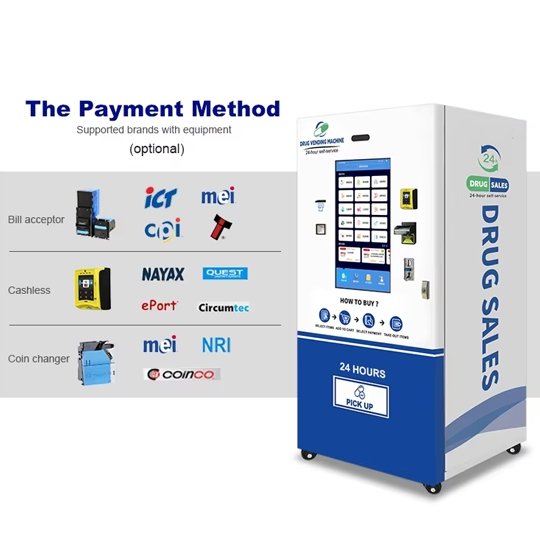
Figure 1: Fully compliant pharmaceutical dispensing station with clear tamper-evident product displays and CE/FCC certification.
Deploy Legally Certified Healthcare Automation
Factory-direct manufacturing with certified international CE, FCC, and ISO145001 compliance.
Explore More Commercial Vending Solutions & Buyer Guides:
• Commercial Pharmacy Vending Machines
• Pharmacy Vending Machine Complete Buyer’s Guide 2026