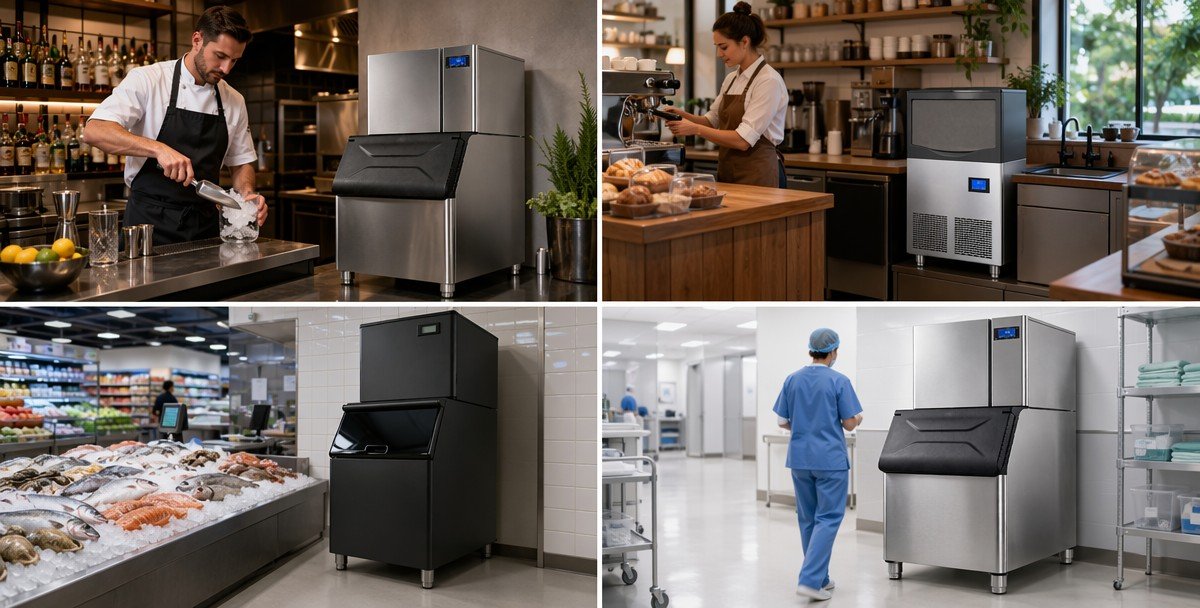
Choosing the right ice equipment is a critical decision for any hospitality or healthcare business. The debate between a nugget ice machine vs cube ice machine often comes down to the specific needs of your customers and the nature of your beverages. As a leading ice machine manufacturer, we understand that the choice between these two popular ice types can impact everything from drink quality to operational costs.
What is Nugget Ice? (The Chewable Trend)
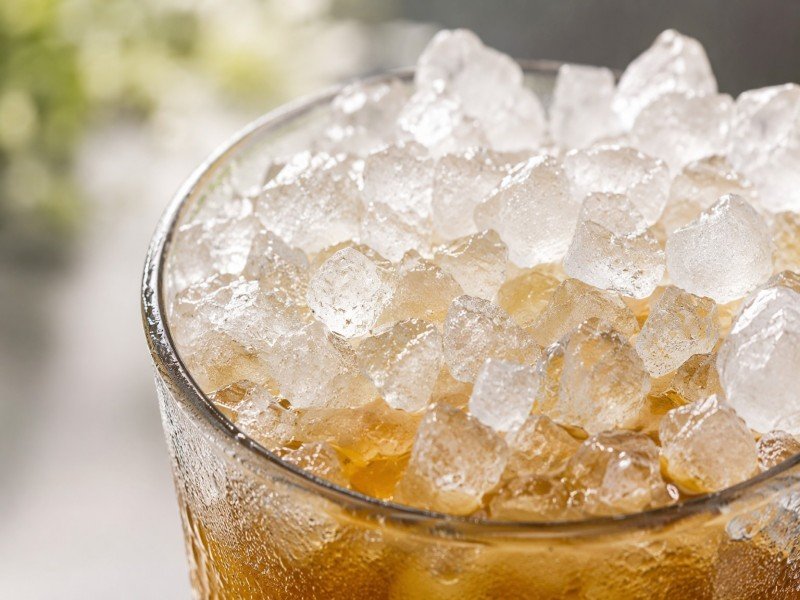
Often referred to as “pellet ice,” “sonic ice,” or “chewable ice,” nugget ice has gained a cult-like following in recent years. But what exactly is it? Nugget ice is created by scraping ice flakes from a refrigerated cylinder (the evaporator) and then compressing them into small, cylindrical shapes using an internal auger. This process creates a porous structure that is soft and chewable.
A commercial nugget ice machine produces ice that consists of about 80% to 90% ice and 10% to 20% air/water. This unique composition allows the ice to absorb the flavors of the beverage it cools, making the ice itself a treat to eat once the drink is finished. It is the preferred choice for Quick Service Restaurants (QSR), convenience stores, and healthcare facilities where patient hydration is a priority. The “chewability” factor is measured by its displacement ratio—nugget ice occupies more space in a cup, meaning you use less liquid while still providing a full-looking beverage.
What is Cube Ice? (The Industry Standard)
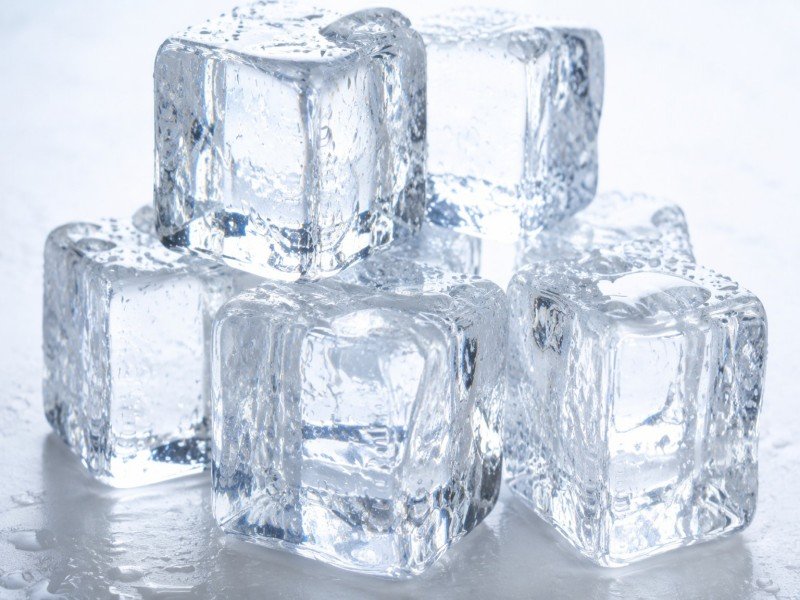
Cube ice, or “rhomboid ice,” is the traditional, hard, clear ice that most people associate with a commercial ice machine. It is produced by running water over a vertical evaporator plate, where it freezes in layers. This results in a solid, dense piece of ice that is nearly 100% pure water. The clarity is achieved by the freezing process, which pushes out impurities and air bubbles as the water cascades over the plate.
Because of its density, a commercial cube ice machine produces ice that melts slowly. This makes it ideal for high-end cocktails, spirit-heavy drinks, and general-purpose cooling in hotels and restaurants where clear presentation and minimal dilution are paramount. Cubes are also the “workhorse” ice; they are easier to transport and store in large bins without the risk of clumping that softer ice types might face.
Nugget Ice vs Cube Ice: A Deep Dive Comparison
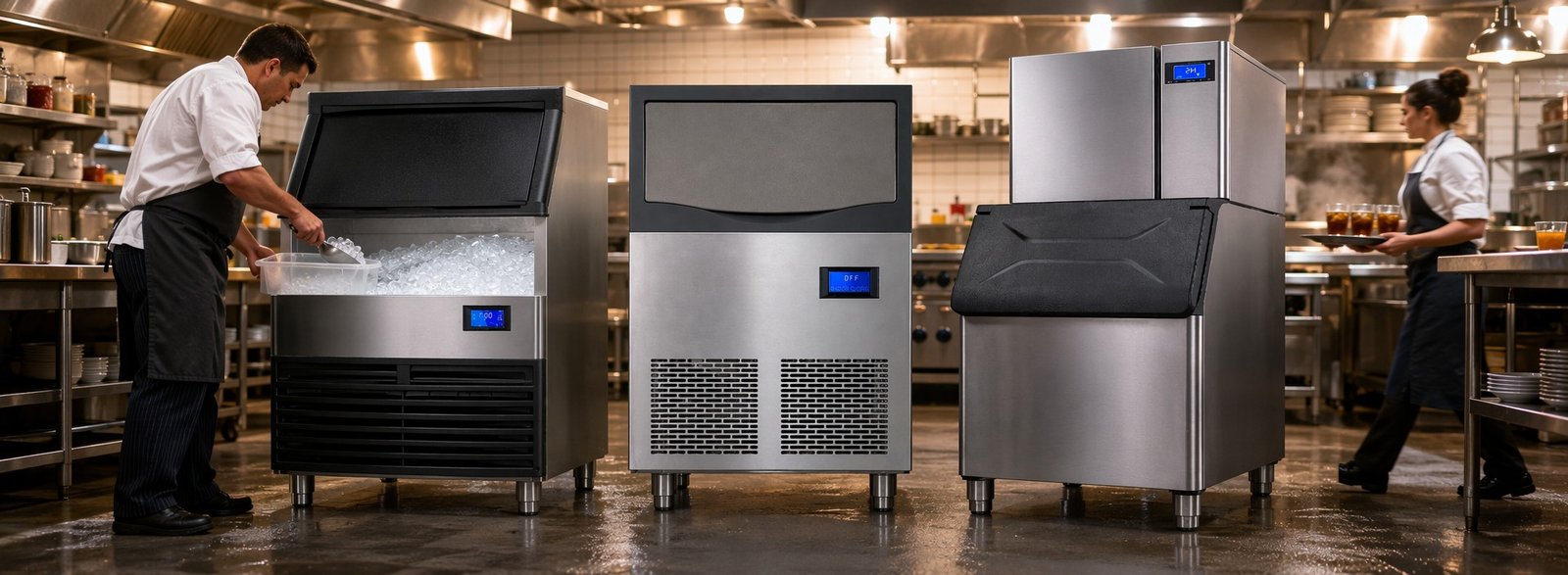
To help you decide which nugget ice machine vs cube ice machine is better for your venue, we have broken down the differences across multiple technical and operational metrics.
1. Texture and Customer Experience
The primary differentiator is texture. Nugget ice is light, airy, and easy on the teeth. It is often described as “crunchy water.” In contrast, cube ice is solid and hard. While customers love to chew nugget ice, attempting to chew a full cube of ice can be a dental hazard. For venues catering to children or the elderly, nugget ice is the safer, more enjoyable option.
2. Displacement and Profitability
From a business perspective, nugget ice offers better displacement. Because the nuggets are small and irregularly packed, they fill more volume in a glass than large cubes. This means you use less soda or juice per serving while the customer still feels they are getting a full drink. Over thousands of servings, this “ice-to-liquid” ratio can significantly boost profit margins in high-volume settings like fast-food chains.
3. Cooling and Melting Rates
Nugget ice has a high surface area relative to its mass, allowing it to cool a warm beverage almost instantly. However, this same high surface area causes it to melt faster. Cube ice, being a solid mass, cools slightly slower but lasts much longer. If you are serving a drink that is meant to be sipped slowly over 30 minutes, cube ice is superior as it prevents the drink from becoming watery.
| Feature | Nugget Ice (Pellet Ice) | Cube Ice (Square/Full Cube) |
|---|---|---|
| Texture | Soft, porous, and chewable | Hard, solid, and crunchy |
| Cooling Speed | Very Fast (high surface area) | Moderate |
| Melting Speed | Fast | Slow (last longer in drinks) |
| Flavor Absorption | Excellent (absorbs syrup/juice) | None |
| Medical Suitability | High (safe for patients to chew) | Low (choking/dental hazard) |
| Bar Application | Blended drinks, mojitos, sodas | Spirit on rocks, classic cocktails |
| Production Range | 50kg to 1,000kg+ per day | 30kg to 2,000kg+ per day |
| Energy Usage | Lower (continuous process) | Higher (batch harvest cycles) |
Operational Comparison: Maintenance and Reliability
When choosing between a nugget ice machine vs cube ice machine, you must consider the maintenance requirements. These two machines operate on fundamentally different mechanical principles.
The Auger System (Nugget)
Nugget machines use a continuous freezing process. An auger (a large screw) rotates inside a refrigerated cylinder, scraping ice off the walls and pushing it through a mold to create the nuggets. Because the auger is always moving, these machines have more moving parts. Proper lubrication and descaling are critical to prevent the auger from seizing. Water filtration is mandatory to protect the bearings from mineral buildup.
The Harvest Cycle (Cube)
Cube machines operate in batches. They freeze water on a plate, then enter a “harvest” mode where hot gas or water warms the plate to release the cubes. This process involves a water pump, a harvest valve, and a thickness sensor. While it has fewer high-friction parts than an auger system, the thermal stress of switching between freezing and heating can eventually lead to plate wear.
Best Applications for Nugget Ice Machines
If your business falls into one of the following categories, a pellet ice machine commercial model is likely your best investment:
- Healthcare & Hospitals: Nugget ice is the gold standard for patient care. It provides hydration, it’s easy to chew for those with dental issues, and it stays soft even in ice packs, allowing it to contour to a patient’s body for injury treatment.
- QSR & Fast Food: Brands like Sonic and Chick-fil-A have built entire marketing campaigns around their “chewy ice.” It drives repeat traffic from customers who specifically seek out the texture of the ice.
- Convenience Stores: Perfect for fountain drink stations. Customers filling up large 32oz or 44oz cups prefer nugget ice because it packs well and cools the drink before they even leave the store.
- University Cafeterias & Offices: Modern workplaces often install nugget machines in breakrooms to improve employee satisfaction. It is seen as a “premium” amenity compared to standard cubes.
- Specialty Cafes: Used for iced coffee drinks and smoothies where the ice can be easily blended into a consistent texture.
Best Applications for Cube Ice Machines
Conversely, a best ice for restaurants list often starts with the classic cube. Consider a commercial cube ice machine for:
- Fine Dining & High-End Bars: Where the clarity of the ice and the slow melt rate are essential to the cocktail experience. For a $20 cocktail, a large, clear cube signifies quality.
- Hotel Ice Dispensers: Cubes are easier to dispense in bulk from floor-standing units. They don’t clump together in the bin as easily as nugget ice, ensuring the dispenser doesn’t jam during peak guest hours.
- Supermarket Displays: Large cubes provide a stable, cold base for seafood or produce that needs to stay cold for 12-24 hours. The slow melt rate reduces the frequency with which the display needs to be refilled.
- General Catering: When you need a versatile ice that works for water, tea, and soda alike across a large event.
- Nightclubs: Where high-volume bucket service for champagne and spirits requires ice that stays solid in a warm, crowded environment.
Energy Efficiency and Sustainability
In the modern market, energy consumption is a major factor. Nugget ice machines are generally more energy-efficient because they use a continuous process. They don’t have to waste energy “harvesting” ice (heating up the evaporator to drop the cubes). However, nugget machines tend to use more water because a portion of the water is used to keep the auger lubricated and clear of scale.
Cube machines, while using less water per pound of ice, require more electricity for the batch cycles. At VendMachinery, we have optimized both systems. Our latest AZ-CIM series uses high-efficiency compressors and R290 refrigerant to minimize environmental impact and lower your monthly utility bills.
Product Series Comparison: AZ-NIM vs AZ-CIM
As a professional ice machine manufacturer, VendMachinery offers specialized series tailored for both ice types. Here is a detailed look at our flagship units:
| Series Name | Ice Type | Best Environment | Capacity Options (24h) | Unique Feature |
|---|---|---|---|---|
| AZ-NIM Series | Nugget / Pellet | Clinics, Cafes, QSR | 80kg, 150kg, 300kg, 600kg | Heavy-duty stainless steel auger |
| AZ-CIM Series | Cube / Square | Hotels, Bars, Clubs | 30kg, 100kg, 500kg, 1,200kg | Vertical plate for high clarity |
| AZ-TIM (Hybrid) | Bullet / Nugget | Home, Small Office | 15kg – 50kg | Compact, plug-and-play design |
Detailed Buying Checklist: 5 Things to Check Before You Buy
Before finalizing your purchase of a nugget ice machine vs cube ice machine, ensure you have addressed these technical requirements:
- Space and Ventilation: All ice machines generate heat. Ensure you have at least 15cm of clearance on all sides for air-cooled models. If the room is very hot, consider a water-cooled model or a remote condenser.
- Water Quality: Hard water is the #1 killer of ice machines. Always install a high-quality water filter. For nugget machines, a phosphate feeder is recommended to prevent scale from sticking to the auger.
- Drainage: Ice machines produce “melt water” that must be drained. You will need a floor drain or a condensate pump if the drain is higher than the machine’s outlet.
- Electrical Supply: High-capacity machines often require a dedicated circuit. Check if your venue supports 220V or if you need a 110V model.
- Storage Bin Capacity: Don’t just look at daily production. If you need 200kg of ice at 7:00 PM on a Friday, but your bin only holds 50kg, you will run out of ice despite having a high-production machine.
Frequently Asked Questions (FAQ)
Is nugget ice the same as crushed ice?
No. Crushed ice is made by taking large cubes and grinding them down. Nugget ice is formed by compressing flakes into a specific shape. Nugget ice is much softer and more consistent in texture than crushed ice.
Which machine lasts longer?
With proper maintenance, both can last 10+ years. However, cube machines are generally considered slightly more durable because they have fewer high-speed moving parts. Nugget machines require more frequent cleaning to protect the auger system.
Can I use a nugget ice machine for cocktails?
You can use it for specific drinks like Mojitos or Mint Juleps. However, for a classic Old Fashioned or Gin & Tonic, nugget ice melts too quickly and will dilute the spirit too much.
Why is nugget ice more expensive?
The machinery required to compress flakes into nuggets (the auger and gear motor) is more expensive to manufacture than the flat plates used in cube machines. However, the increased beverage profits from displacement often offset this cost quickly.
Does ice type affect the taste of the water?
Indirectly, yes. Cube ice is often purer because the freezing process rejects minerals. Nugget ice contains more of the original water’s minerals. This is why high-quality filtration is even more important for nugget ice machines.
“The type of ice you serve is as much a part of your brand as the menu. Don’t let a poor ice choice dilute your customer experience. Choose a machine that matches your customer’s expectations and your venue’s operational reality.” — VendMachinery Engineering Team
Ready to upgrade your beverage service? Whether you need a chewable ice machine for your clinic or a high-capacity cube maker for your hotel, we have the factory-direct solution for you. Contact us today for a free consultation on sizing and model selection.
[Inquiry Now for a Custom Quote]